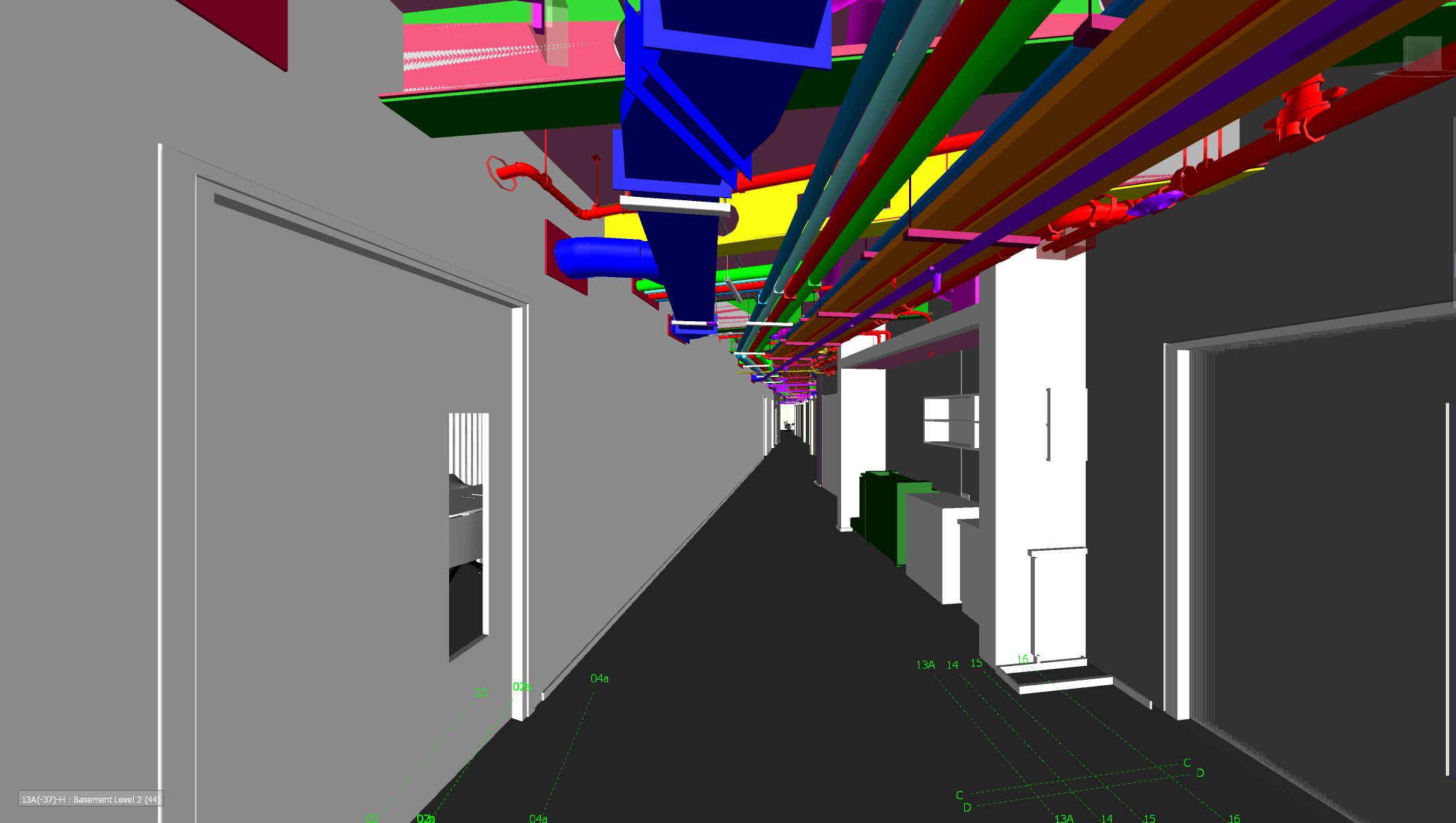
In a busy ceiling void, ductwork, pipework, cable containment and sprinkler mains all compete for the same space. A clash found on screen costs minutes to resolve. The same clash found on site means rework, delay and a difficult conversation about who pays.
What coordination means
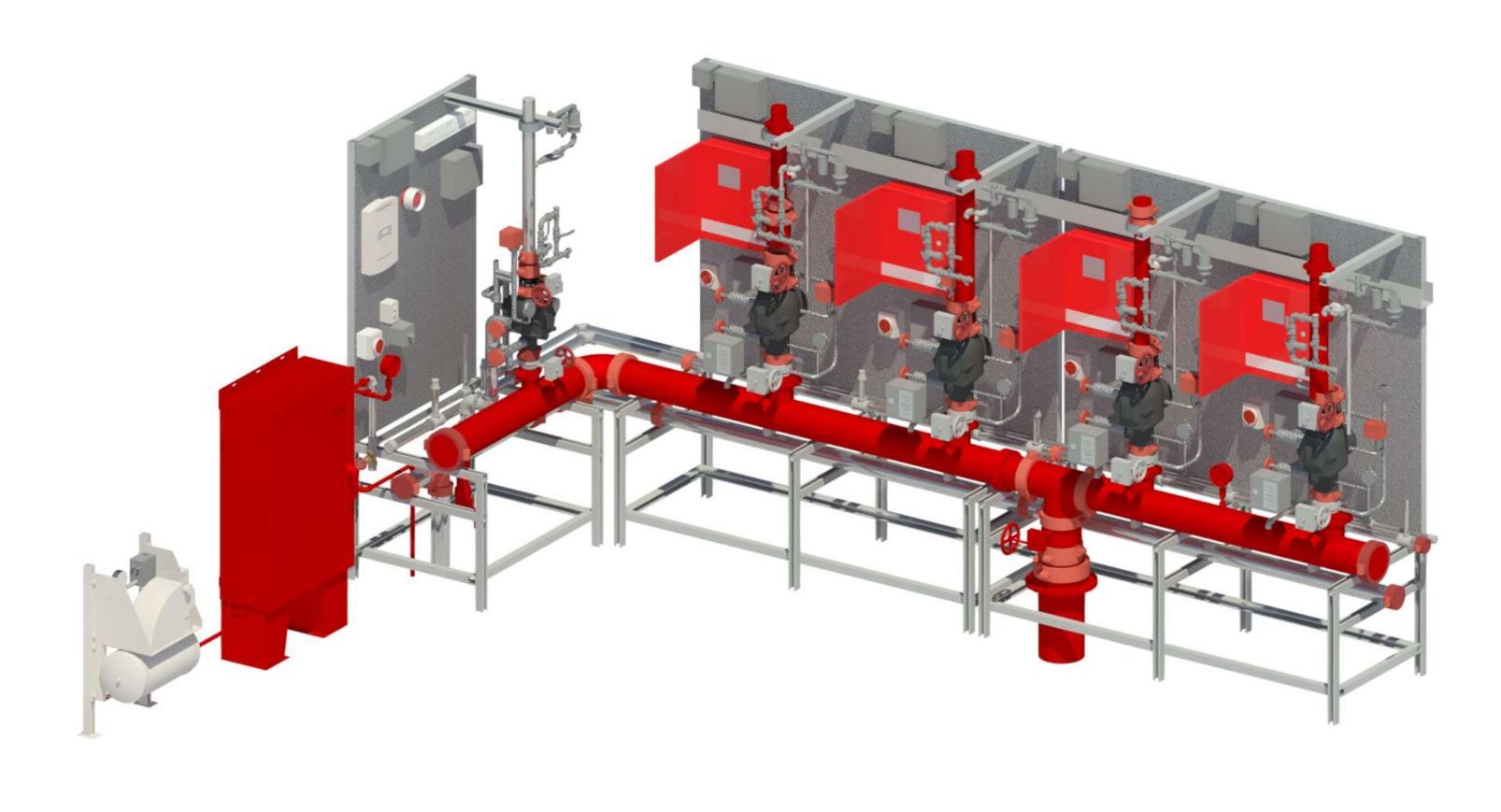
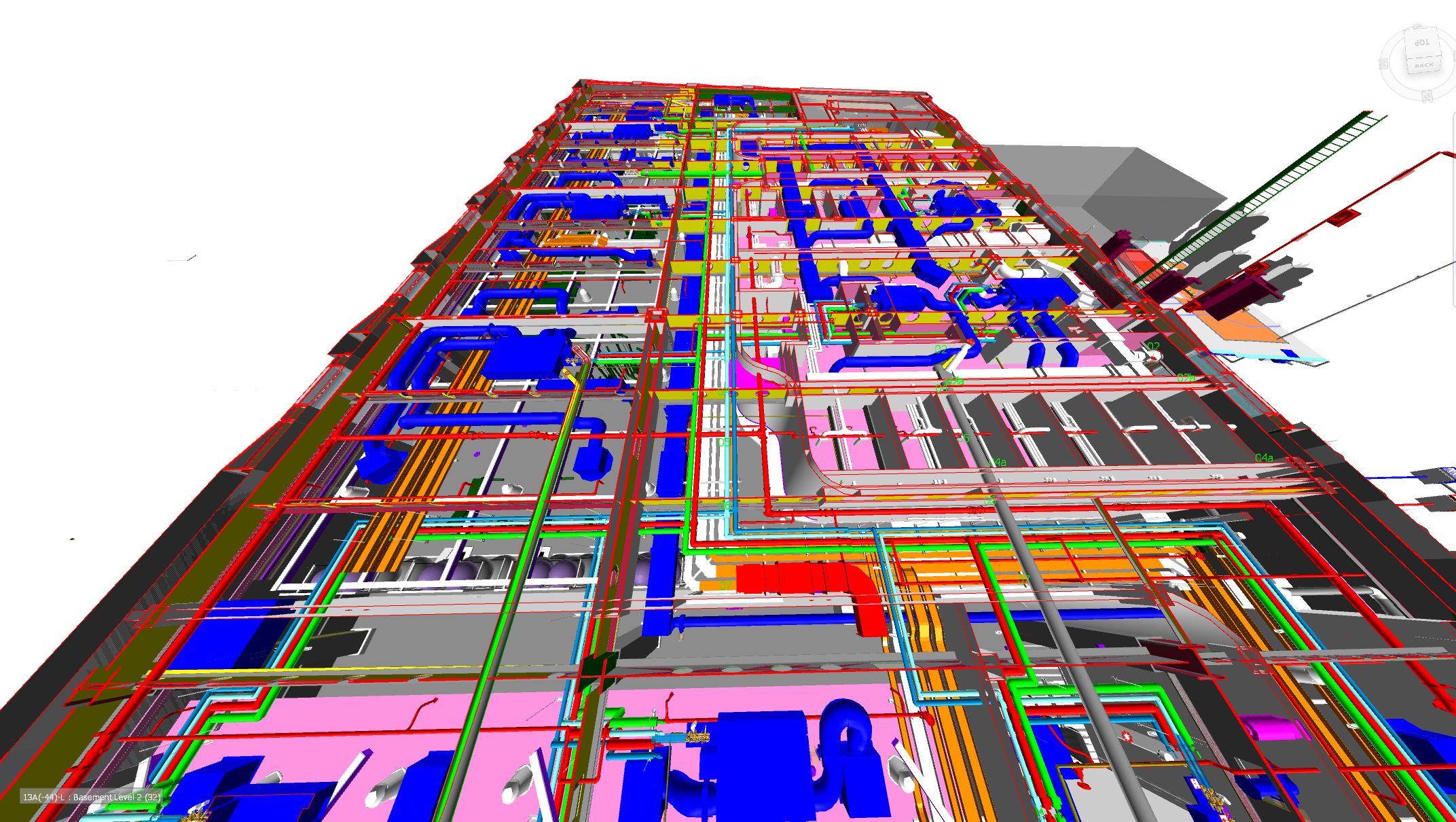
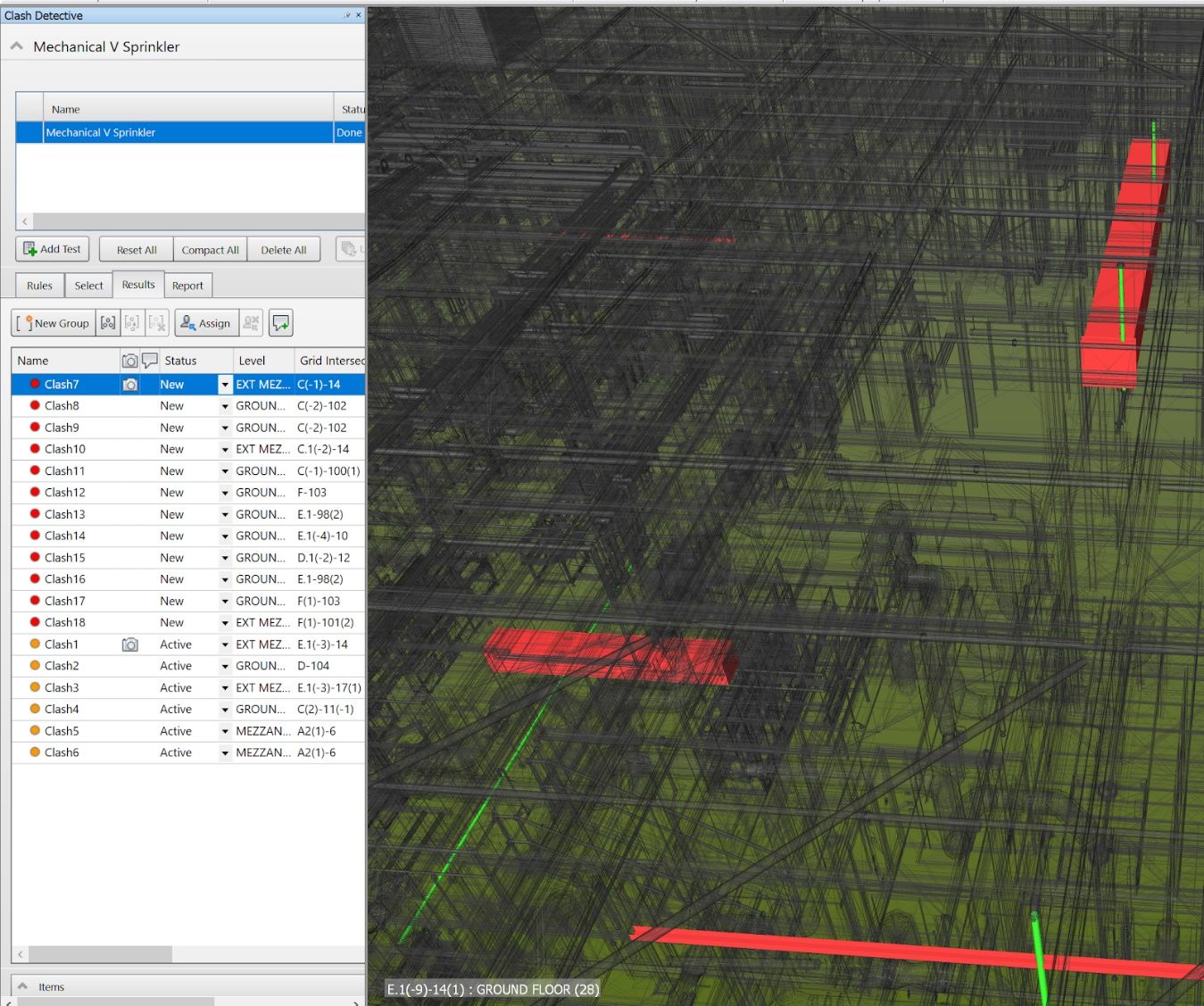
Every trade’s model is brought together into one coordinated model. Clash detection finds where services collide, the clashes are resolved, and coordinated drawings are issued before installation starts. The model then carries through to as-built records with the asset information the client needs.
How we work
- Cloud-based coordination tools, so the whole project team works from the same 3D views and mark-ups.
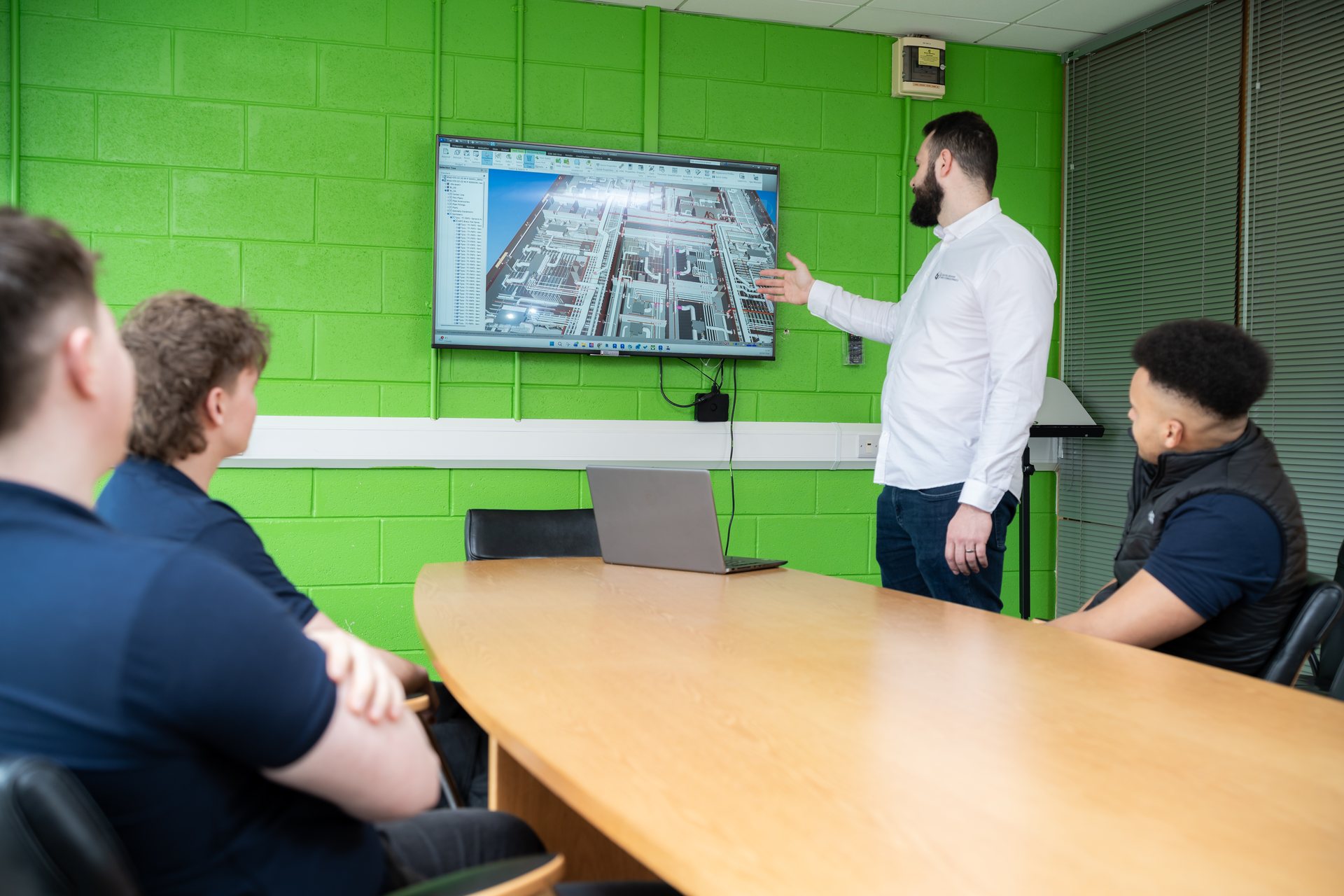
- Regular BIM coordination meetings, so issues are resolved as they come up.
- Builder’s work openings, equipment schedules and 3D sections produced from the coordinated model.
- COBie compliant models that carry the right level of detail and meet the contract.
In practice
On a 12-storey office fit-out for one of the world’s largest search engine providers, we coordinated the mechanical and electrical services through to construction-stage detail. Where several services squeezed through tight bottlenecks, our team checked the installation against the model on tablets on site. The fit-out was completed three months ahead of the agreed date.
Four things that help
- Bring the trades into the model early, before routes are fixed.
- Agree the level of detail each model needs at each stage.
- Keep the model live as the design changes, not just at milestones.
- Check the tightest areas on site against the model as they are installed.